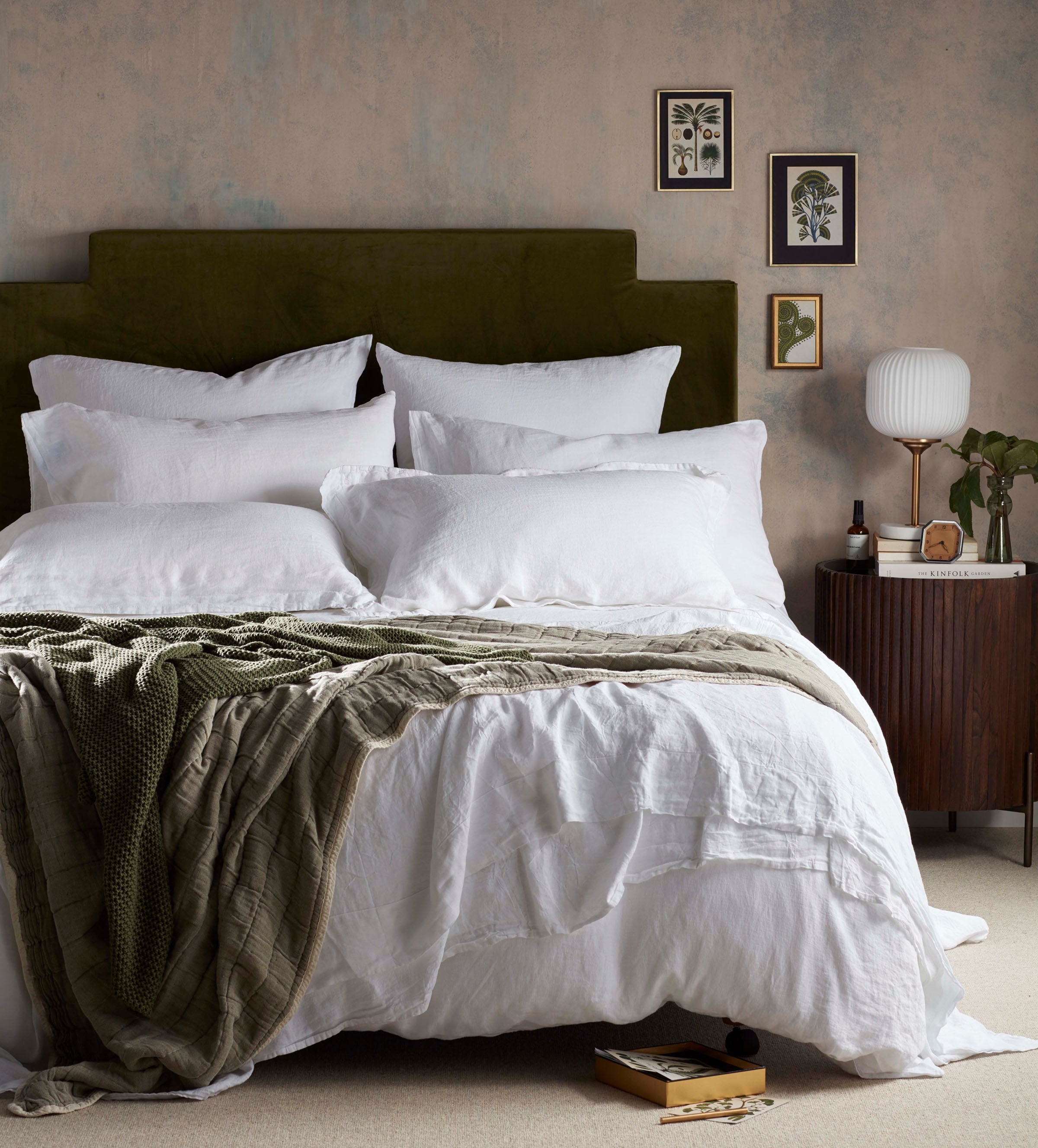
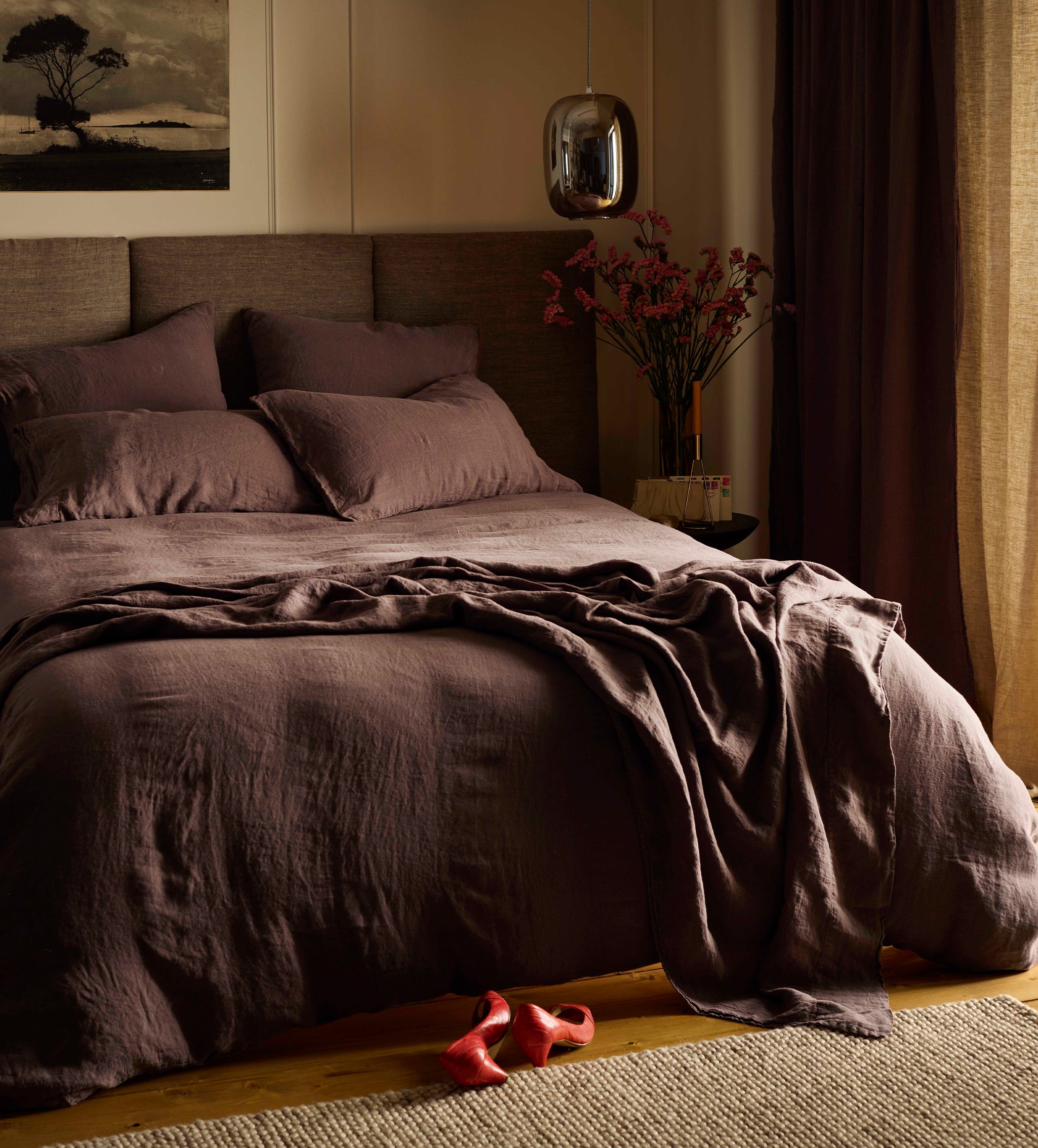
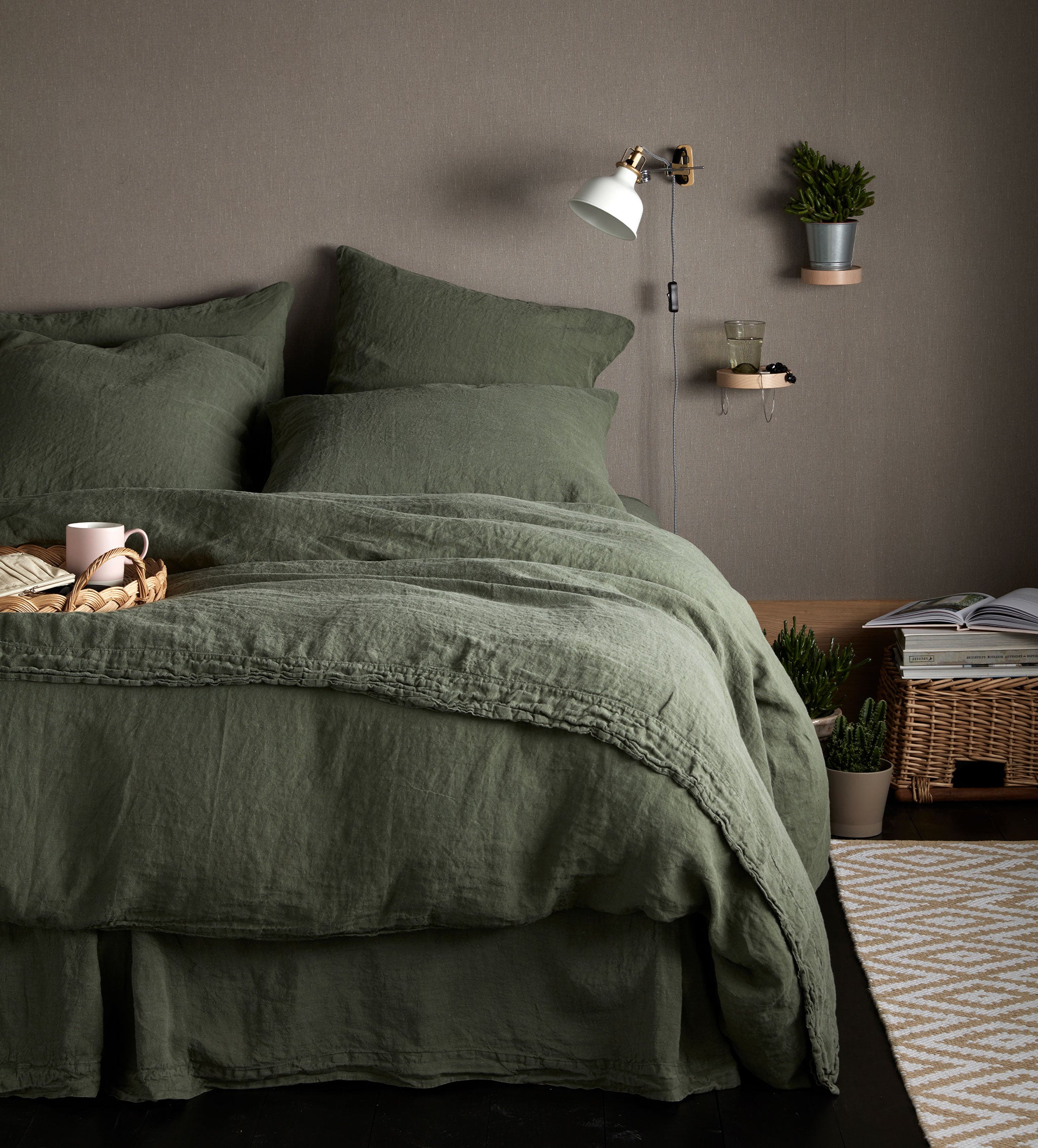
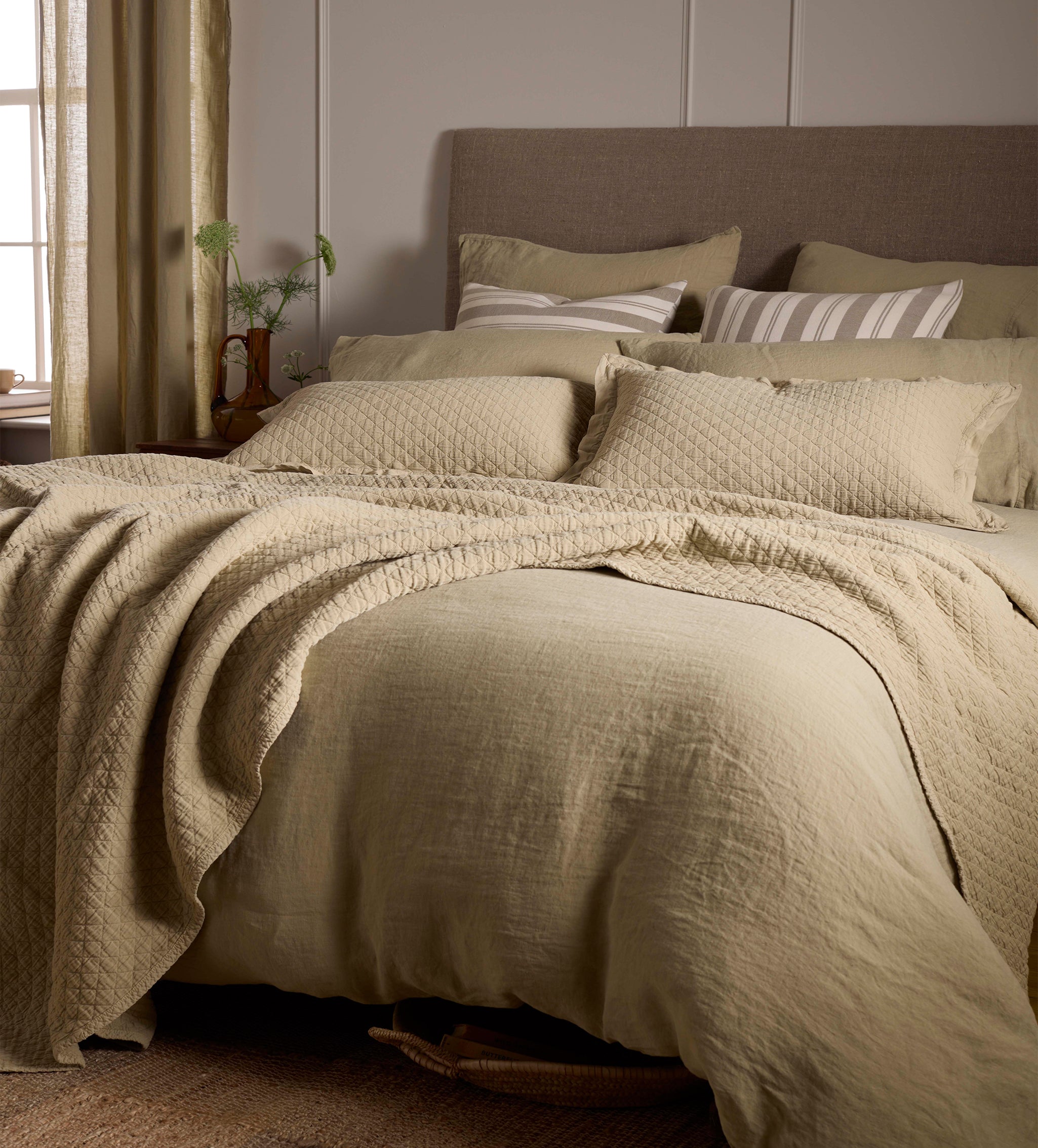
Our beautiful 100% linen bedding is a little different from cotton, and we think that’s exactly what makes it so special. Made from the long fibres of the flax plant, linen is a wonderfully hardy fabric that just gets better with time. But to get the absolute best out of your new sheets, you need to know how to properly wash and care for linen bedding.
We’ve put together this foolproof guide, so you know exactly how to wash, dry, and look after your linen bedding - and keep it buttery soft and fabulously fresh for years to come.

All About Linen
Linen is a simple fabric to look after, but how it is laundered and dried can dramatically change its feel. Unlike cotton, linen can absorb a fair amount of moisture without feeling damp on your skin. This makes it a brilliant choice for bedding, especially during warm weather or if you want a fabric best suited for your skin (and your sleep).
We don’t talk about thread count when it comes to linen, since its threads are naturally thicker than cotton's. We have, however, selected a heavier weight (165gsm) for longevity and that lovely, reassuring feel. It's why linen is such a brilliant investment.
Find out why linen bedding is worth every penny in our blog.
What are linen slubs?
You may see small, uneven lumps in the fabric of your new linen. These are known as ‘slubs’ and are as completely normal and a charming part of the fabric’s natural, rustic character. Since each piece is finished before laundering, you might find the odd bit of fluff inside.
This, again, is completely normal and should be gone with the first wash. Your linen duvet covers and sheets will get softer and softer over time and with every wash. We've tried lots of washes and drying with our fabrics, and we have the following tips to make wash day a breeze...
How to Wash and Dry Your Linen Bedding
Washing your linen shouldn't be intimidating. To make it super simple and for those moments when you're standing right in front of the washing machine, here is our foolproof routine:
Your 5-Step Linen Wash Routine
- Check the label: We recommend 30°C or 40°C on a gentle cycle.
- Separate colours: Keep your whites bright and your darks deep.
- Use liquid detergent: Avoid powders with "optical brighteners”.
- The extra spin: Spin again to remove excess water and minerals.
- Tumble or hang: Tumble on low for softness, or line dry for freshness.
If you like your bed linen to be super cosy, we highly recommend that cool wash with a little fabric softener. You can wash linen at very high temperatures, but this can make it feel stiffer when dried.
Because linen holds a lot of water, that extra spin in the machine we mentioned is a real game-changer. It helps remove any minerals that might affect the feel. To dry, simply tumble dry on a cooler temperature or line dry outside. These steps will keep it wonderfully soft, and you can read more of our secrets in our guide to making linen softer.
If you prefer your linen fitted sheets and covers to be stiffer, wash them as normal without a softener, and dry them flat or on a line to give them a lovely crisp feel. They will naturally get softer as you sleep in them, though.ecause linen holds a lot of water, that extra spin in the machine we mentioned is a real game-changer. It helps remove any minerals that might affect the feel. To dry, simply tumble dry on a cooler temperature or line dry outside. These steps will keep it wonderfully soft, and you can read more of our secrets in our guide to making linen softer.
If you prefer your linen fitted sheets and covers to be stiffer, wash them as normal without a softener, and dry them flat or on a line to give them a lovely crisp feel. They will naturally get softer as you sleep in them, though.
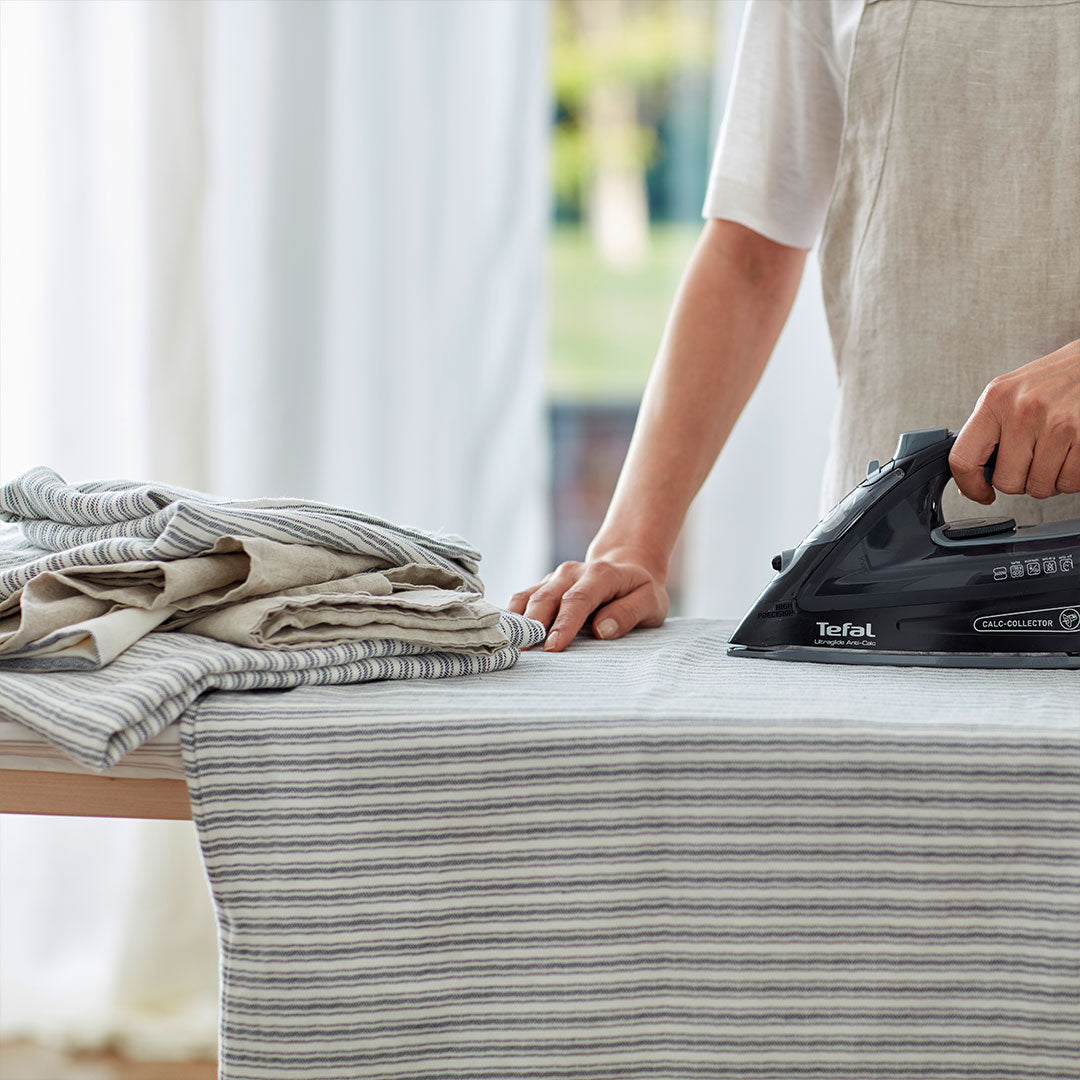
To Iron, or Not to Iron Your Linen Bedding?
Ironing? Well, one of the absolute best things about 100% linen bedding is that you don’t need to iron it. Hooray!
The idea is that it has a tumbled, relaxed look perfect for creating a calming, slow bedroom. So, unless it's really crumpled in the dryer, you can throw it straight onto the bed and jump in.
If you would like to give it a quick press (perhaps you love ironing or are after a smarter look), use a medium-hot iron. It's best to iron darker-coloured linens, like our French Blue or Charcoal, on the reverse while they're still slightly damp to avoid shiny patches. Finally, if you have direct sunlight in your room, try to rotate your dark-coloured linen so it doesn’t fade in one spot.
Linen Care Cheat Sheet
For those days when you just need a quick reminder.
| Do This | Avoid This |
|---|---|
| Wash at 30°C or 40°C | Hot washes (can make fabric stiff) |
| Use liquid detergent | Powders with bleaching agents (whiteners) |
| Line dry or cool tumble | Over-drying (baking the fibres) |
| Embrace the wrinkles | Ironing dry (iron damp if you must) |
| Wash darks separately | Mixing colours (prevents transfer) |
We’d Love to Hear From You
We are constantly learning and trying to improve our advice on washing and caring for our bed linen. If you have an experience, or a tip that we can share, we would love to hear from you. You can email molly@secretlinenstore.com, so we can share your expertise and learn from you, too.
Most importantly, enjoy it; snooze and revel in these unique, wonderful fabrics.
Still tossing and turning over which fabric is best for you? Then read our article, The Luxury of Cotton or The Laziness of Linen: What to Choose?
Shop our 100% linen range