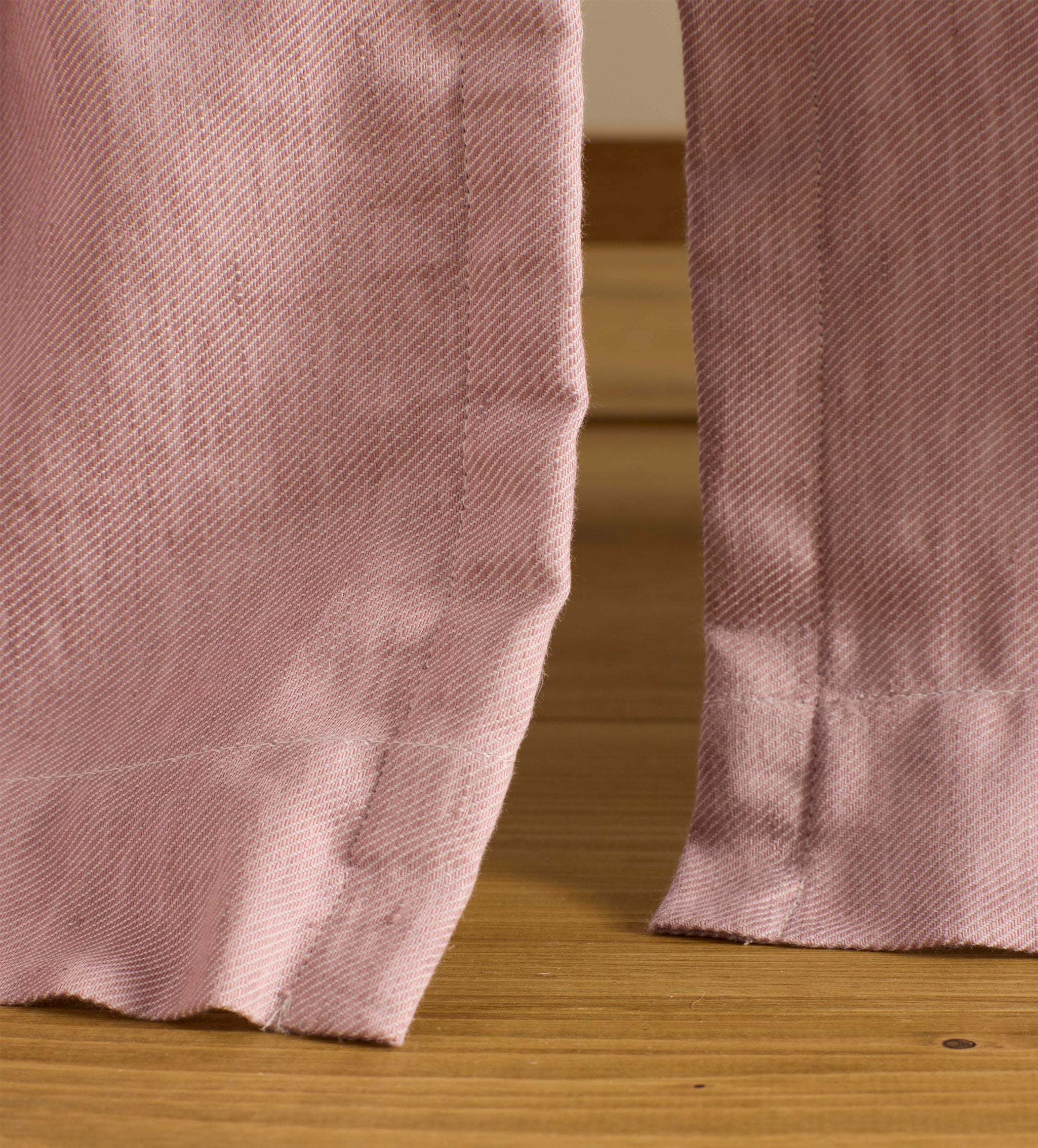
Our curtains are thoughtfully made and designed to be safe under normal, everyday use. They must be used with care and regard for safety instructions, especially in homes with children, older adults, or anyone with limited mobility. They're built to stay stable, hold their shape, and perform reliably throughout their use and care cycle.
1. Before Installation
Check Surface and Structure
- Ensure walls, ceilings, and window frames are structurally sound and suitable for anchoring curtain fixings
- Avoid plasterboard or weak surfaces unless using appropriate anchors
Select Appropriate Fixtures
- Use curtain rods or tracks suitable for the weight of your curtains
- All brackets, screws, and fixings must be suitable for the wall type (e.g. masonry plugs for brick walls, toggle bolts for plasterboard)
Keep Away from Heat Sources
- Do not install curtains near open flames, stoves, radiators, or other heat-producing appliances
2. Installation Guidelines
Tools and PPE
- Use appropriate tools (drill, screwdriver, level, etc.)
- Wear safety goggles and gloves when drilling
Step-by-Step Installation
- Measure and mark bracket positions with a spirit level
- Drill holes at marked points using the correct bit for the wall type
- Insert wall plugs and secure brackets tightly
- Mount the rod or track and test its stability before hanging curtains
- Hang the curtain securely and ensure it moves freely
Fall Hazard Precaution
- Do not climb on unstable furniture or makeshift platforms — use a step ladder with a firm base
- Ensure the area below the installation is clear to prevent injury from falling tools or materials
3. Use and Maintenance
Fire Safety: for the Home
- While flame-retardant curtains are not a legal requirement for domestic settings, fire safety should always be considered when selecting and placing curtains in your home
- Safe Placement: Keep curtains away from open flames, such as candles, fireplaces, or gas hobs; avoid hanging curtains over, or too close to, radiators, electric heaters, or other heat sources
- Candle and Smoking Safety: Never place lit candles on windowsills near curtains; do not smoke near window coverings
- Optional Fire-Retardant Treatment: Flame-retardant sprays are available for home use — always follow manufacturer instructions and reapply as needed after cleaning
Fire Safety: for Commercial or Public Use
- Curtains installed in commercial, rental, or public-access environments (e.g. hotels, schools, theatres, offices) must comply with fire safety regulations
- Mandatory Flame Retardancy: Curtains should be made from inherently flame-retardant materials or treated with certified flame-retardant products; materials should comply with EN 13773 or an equivalent national standard; ensure certification is provided by the supplier
- Certification and Documentation: Keep a copy of the flame-retardant certificate for each curtain used on the premises; if curtains are custom-made or altered, confirm that flame-retardant properties are retained
- Cleaning and Maintenance: Washing or dry-cleaning can affect flame resistance; follow manufacturer guidance and re-treat as needed using approved fire-retardant sprays
- Regular Fire Safety Checks: Include curtain materials in fire risk assessments; replace damaged or heavily worn curtains to maintain compliance
Choking and Strangulation Risks (especially in children's environments)
- Avoid long cords or tie-backs; use safety breakaway devices if cords are present
- Secure cords and loops out of reach of children using cleats or tensioning devices
Weight Load
- Do not hang heavy objects (e.g. laundry, decorations) on the curtain rod
- Regularly check fixings for signs of loosening or wear
Ventilation and Moisture
- In kitchens or bathrooms, ensure adequate ventilation to avoid damp, mould, or degradation of materials
Cleaning and Care
- Follow fabric-specific care instructions; avoid harsh chemicals or excessive heat
- Detach curtains and hardware if deep cleaning or moving is required
4. Ongoing Safety Checks
Every 6 Months
- Inspect curtain hardware and fixings
- Re-tighten loose screws
- Check for any frayed cords, heat damage, or sagging supports
WARNING:
Failure to follow installation and usage instructions can result in injury, property damage, or fire. Installation should be performed by a competent adult. If unsure, consult a qualified tradesperson.